

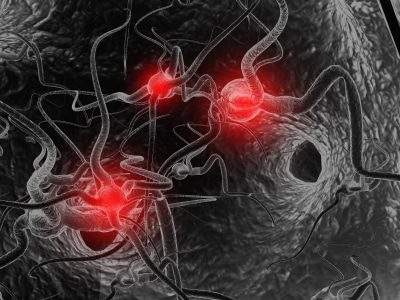
 Parkinson’s disease is a chronic and progressively degenerative neurological condition that impacts movement of the body. Parkinson’s is usually identified by its trademark tremor, the shaking or trembling of the limbs and face. It also causes slowness and loss of controlled motor movement; stiffness of the limbs and trunk; and a decline in balance and coordination. These symptoms obviously disrupt everyday activities such as walking, eating, speaking, toileting, and using your hands. Currently, 1 in 350 Australians are diagnosed with Parkinson’s, with diagnoses on the rise. This also excludes undetected cases. The likelihood of being diagnosed with Parkinson’s disease increases with age, however, the occurrence of this condition is not limited to any particular age group.
Parkinson’s disease occurs when the area of brain called the substantia nigra becomes impaired or dies. The substantia nigra is responsible for creating dopamine, hormone and neurotransmitter that is essential in creating smooth coordinated movements of the body’s muscles. This decrease in dopamine production is also linked to an accumulation of a protein called alpha-synuclein, which create abnormal protein formations, known as amyloids, in neuronal cells.
A recent study published in the scientific journal “Molecular Cell” have found that a particular protein found in E. Coli may be beneficial in protecting against these irregular protein accumulations. Researchers at the University of Michigan have found that not all amyloids are harmful, such as the ones found in E. Coli. They discovered that these E. Coli amyloids are found on the surface of the cell, having a protective effect, rather than inside the cell, where they would be toxic. E. Coli cells use these external protein formations to adhere to the intestinal wall. The research team then continued to analyse E. Coli bacterial cells to determine what prevents these amyloids from forming inside the E. Coli cell and discovered it was due to a protein known as CsgC. Additional studies in UK and Sweden have confirmed that CsgC is capable of preventing the development of these amyloids within cells, and further reinforce a milestone finding in Parkinson’s disease research.
Parkinson’s disease is currently an incurable condition. This being said, it is fundamental to treat the progression of potential symptoms at an early stage of the disease. Parkinson’s disease is a highly complex condition and varies from individual to individual, so it is imperative that treatment occurs at a multifaceted level. My Rehab Team consists of various practitioners in the fields of physiotherapy, occupational therapy, speech therapy and dietetics can contribute towards a multidisciplinary treatment plan. If this applies to you or someone you know and would like to find out more, please contact us on 1300MYREHAB (1300 469 794) or at info@myrehabteam.com.au.
http://www.parkinsons.org.au/about-ps/whatps.html
Image courtesy of Rendith Krishnan @ http://www.freedigitalphotos.net [Online] (Accessed on 9th April, 2015)

